
 Skip to content
Sun exposure and aging can lead to dark spots, redness, and uneven skin tone. Photofacials offer a non-invasive way to address these concerns using controlled pulses of light that target pigmentation and visible redness. Knowing what to expect before and after treatment can help patients understand how their skin may respond and when improvements become noticeable.
An IPL photofacial can help reduce the appearance of sun spots, uneven pigmentation, and visible redness, resulting in a clearer, more even-looking complexion. Immediately after treatment, the skin may appear slightly red or swollen, while pigmented spots may temporarily darken before gradually fading.
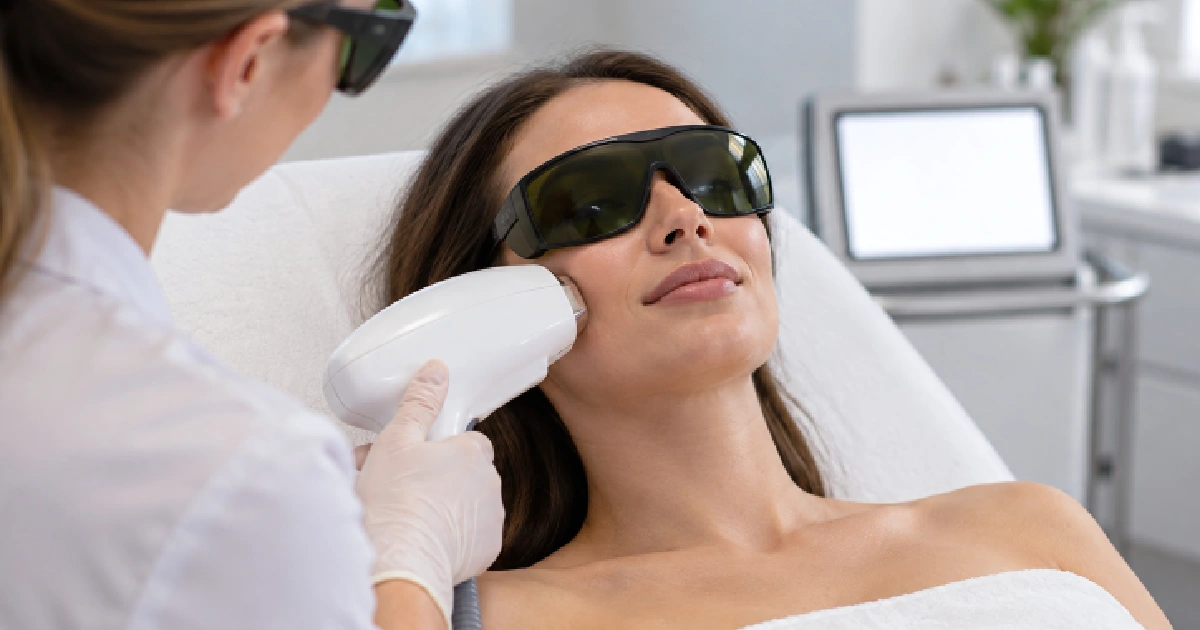
An IPL photofacial utilizes intense pulsed light to address discoloration and certain vascular concerns. Unlike treatments that rely on a single laser wavelength, IPL technology delivers multiple wavelengths of light through a specialized device.
The light is absorbed by specific targets within the skin, particularly melanin in brown spots and hemoglobin in visible blood vessels. This process produces controlled heat that helps the body gradually clear targeted pigmentation or reduce the appearance of superficial redness.
An IPL facial primarily addresses uneven coloration rather than deep wrinkles or significant skin laxity. Although IPL may support collagen remodeling, improvements in firmness and texture tend to be more subtle than changes in pigmentation.
The outcome depends on the patient’s skin characteristics, treatment settings, and the condition being addressed.
The first visible changes after treatment are not necessarily the final results. Some patients experience temporary pinkness, warmth, or mild swelling, similar to a light sunburn.
Pigmented areas may initially become darker as the treated pigment moves toward the skin’s surface. This temporary darkening is often expected, particularly when treating freckles and sun spots.
Over the following days, some darkened spots develop a fine, coffee-ground-like appearance before naturally flaking away. Patients should avoid picking or exfoliating these areas prematurely.
The recovery experience varies considerably. Some individuals return to their normal activities shortly afterward, while others need additional time for visible redness or sensitivity to settle.
The most recognizable photofacial benefits involve changes in pigmentation, redness, and overall skin appearance. Improvements generally develop gradually rather than immediately following the appointment.
Results vary, and not every concern responds equally to the same treatment settings.
Changes following an IPL skin treatment occur in stages. During the first few days, temporary redness and darkening of pigmented spots may be more noticeable than cosmetic improvement.
Between approximately one and two weeks, superficial pigmentation may begin to clear, although recovery depends on the treated area and individual skin response.
Additional changes may become apparent over subsequent weeks, especially when multiple treatments are recommended.
A treatment series is sometimes necessary for more extensive sun damage or persistent discoloration. Providers generally assess progress between appointments before determining whether further sessions are appropriate.
Results are not identical for everyone. Skin type, sun exposure history, and the underlying cause of discoloration influence how much improvement is possible.
IPL is frequently considered for sun damage treatment, particularly when pigmentation appears as scattered freckles, age spots, or irregular patches caused by ultraviolet exposure.
It may also serve as a pigmentation treatment for selected superficial discoloration concerns. However, not all pigmentation disorders respond favorably to light-based procedures. Melasma, for example, can sometimes worsen with heat or inappropriate treatment settings.
Patients considering dark spots treatment should have suspicious or changing pigmented lesions evaluated before undergoing cosmetic light therapy.
Darker skin tones may carry a greater risk of burns or unwanted pigment changes with certain IPL settings. A professional assessment is therefore important for determining treatment suitability.
Daily sun protection is particularly important after IPL. Broad-spectrum sunscreen with SPF 30 or higher, protective clothing, and limiting excessive sun exposure can help prevent additional discoloration.
Gentle skincare is also advisable while the skin recovers. Patients should follow their provider’s instructions regarding exfoliating acids, retinoids, and other potentially irritating products.
Because ultraviolet exposure and natural aging continue, some individuals may benefit from periodic maintenance treatments.
At Timeless Skin and Wellness, we provide Photofacials in South Ogden and North Logan, UT for patients seeking improvements in sun-related discoloration, visible redness, and uneven skin tone.
We use intense pulsed light technology to target selected pigmentation and vascular concerns while considering each patient’s skin characteristics and treatment goals.
Our approach begins with evaluating the skin and discussing what the procedure may realistically accomplish. We recognize that effective skin rejuvenation involves selecting appropriate treatments rather than expecting one procedure to address every concern.
Our teams in South Ogden and North Logan also provide guidance on preparation, aftercare, and maintaining results. Patients interested in reducing visible sun damage can schedule a consultation at either of our Utah locations to discuss their options.
Book Your Photofacial Treatment Today.
Some patients notice improvements after one session, although additional treatments may be recommended depending on their skin concerns.
Patients commonly describe a brief snapping or warming sensation during light pulses, with discomfort varying by treatment area.
IPL may reduce certain pigmented spots, but complete removal is not guaranteed.


Ready to schedule your beauty treatment?
We offer free consultations.